Tuesday, February 17, 2015

The 10 Great SEO tips for your blog or site

The 10 Great SEO tips for your blog or siteExposing The 10 Great SEO tips for your blog or site


#1 Content - The 10 Great SEO tips
Content is the Key -The-10-Great-SEO-tips
As cliche as it sounds this is the number one for any search marketing strategy, it is impossibly important to ensure that you have content worth viewing. Without this one simply step to ensure that there is a reason for someone to be on your site, everything else is useless. There are a lot of great sites to find inspiration for writing great content that works.

#2 Incoming Links - The 10 Great SEO tips
Incoming Links - The-10-Great-SEO-tips
A link is a link is a link, but without the simplest form you aren’t going to do well in search engines. The more links you have the more often you are going to be crawled. It is also important to make sure that you have the proper anchor text for your incoming links. The easiest way to gain quality links from other sites is to link to sites to let them know your site is there and hope for a reciprocal link. It is also important to make sure that you have content that is worth linking to on your site.

#3 Website title - The 10 Great SEO tips
Website Title - The-10-Great-SEO-tips
Making sure that you have the right web site titles for your pages is extremely important. The keywords you place in your title are important in order to ensure that your topic is understood by Google. One of the primary factors for ranking is if the title is on-topic with the search results. Not only is it important for robots to index and understand the topic of the page either. It is important for click-through rates in the search results. Pay attention to what you click on when you are searching in Google, I know that I don’t always click the first results. Using great titles and topics on your site will bring you more traffic than a number one listing. Most of the time it is within the first page, but I skim through the titles to see which looks to be more on-topic for my search query.

#4 Heading tags - The 10 Great SEO tips
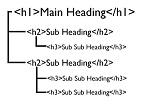
Heading tags - The-10-Great-SEO-tipsWhen you are laying out your site’s content you have to be sure that you are creating the content flow in such a way that the heading tags are based on prominence. The most prominent of course being the h1 tag, which says this is what this block of copy is about. Making sure you understand heading tag structure is very important. You only want to have one (or two) h1 tags per a page. It is important to not just throw anything into an h1 tag and hope you rank for it. Visit How to Optimize SET title tag Blogger

#5 Internal Linking - The 10 Great SEO tips
Internat-linking-The-10-Great-SEO-tips
Making sure that your internal linking helps robots (and visitors!) to find the content on your site is huge. Using relevant copy throughout your site will tell the robots (and visitors!) more effectively what to expect on the corresponding page. You do want to make sure that on pages you don’t want to rank in Google that you add a nofollow tag to ensure that the ranking flow of your site corresponds with your site’s topic and interests. No one is going to be searching Google to find out what your terms of service or privacy policy are.

#6 Keyword Density - The 10 Great SEO tips
Keyword Density - The-10-Great-SEO-tips
Ensuring that you have the right keyword density for your page and sites topic is paramount. You don’t want to go overboard and use the keyword every 5th word but making sure it comes up often is going to help you rank better in search engines. The unspoken rule is no more then 5% of the total copy per a page. Anymore then this and it can start to look a little spammy. Granted, you aren’t shooting for 5% every time. It is really all about context and relevance just make sure it is good, quality copy.

#7 Sitemaps - The 10 Great SEO tips
Sitemap - The-10-Great-SEO-tips
It is always a good idea to give search engines a helping hand to find the content that is on your site. Making sure that you create and maintain a sitemap for all of the pages on your site will help the search robots to find all of the pages in your site and index them. Google, Yahoo, MSN and Ask all support sitemaps and most of them offer a great way to ensure that it is finding your sitemap. Most of the time you can simply name it sitemap.xml and the search robot will find the file effectively.


#8 Meta Tags - The 10 Great SEO tips
Meta Tags - The-10-Great-SEO-tips
Everyone will tell you that meta tags don’t matter, they do. The biggest thing they matter for is click-through though. There will be a lot of times when Google will use your meta description as the copy that gets pulled with your search listing. This can help to attract the visitor to visit your web site if it is related to their search query. Definitely a much overlooked (as of late) ranking factor. Getting indexed by search engines and ranking well is just the first step. The next, and biggest, step is getting that visitor that searched for your keywords to want to click on your search listing. Visit Free Meta Tags Analyzer Tool

#9 URL Structure - The 10 Great SEO tips
Ensuring that your URL structure compliments the content that is on the corresponding page is pretty important. There are various methods to make this work, such as modrewrite on apache.

#10 Domain - The 10 Great SEO tips
Domain keywords - The-10-Great-SEO-tips
It can help to have keywords you are interested in ranking for within your domain, but only as much as the title, heading and content matters. One very important factor that is coming to light is that domain age is important. The older the site or domain, the better it is not spam and can do well in search results. The domain age definitely isn’t a make or break factor but it does help quite a bit.

Monday, March 4, 2013

Get Smart at Researching a New Demographic for Your Blog

Not every blog out there that’s aimed at a particular demographic is run by someone who is actually part of that demographic. For instance, there are plenty of hip-hop music sites that are run by companies that have plenty of staff—or just one entrepreneur—that may have no interest in the music whatsoever. To avoid becoming something of a bad joke among the demographic you’re trying to target, you have to research them so that you always sound like you know what you’re talking about in your posts.


Read the News

One of the first places you’ll want to check for information on your demographic is a good news site. Check with Google News, of course, by doing a search for anything related to the topic you blog on. This is a great way to figure out what’s currently going on with that demographic and their interests.

Check on PR sites, as well. Many of these sites carry press releases, some of which may have been released by companies that are important to your demographic. This is a great way to make sure that your blog is informed and that people get something out of reading it when they stop by for a visit.

Learn the Subculture

If your target demographic is a subculture, learn about them. You may even want to get to know some people who could legitimately blog about the topics in the role of guest bloggers. This provides you with a way to get good content without lifting a finger on your keyboard. Check blogs that appeal to your target demographic and ask their owners if they’d like to contribute something to yours.

Engage with Them


If you’re using WordPress as your blogging platform—most people are—there are plenty of Premium WordPress themes that have sophisticated features built into them. They include the ability to network with sites such as Facebook and Twitter and systems that make commenting very easy and that make controlling spam very convenient. Use these themes and activate the features. If people can network with you right off of their social networking profiles, they’re more likely to share and like your posts, which can go a long way toward promoting your blog and making it a success. Take the time to get to know your target demographic and the payoffs can be very big for your blog, even if you start out knowing little about the readers.

About author
Anny Solway is a dedicated writer at ThemeFuse – a web studio that creates original WordPress templates, that can be used out of the box. She loves to share blogging and technology tips.

Monday, September 24, 2012

SEO vs SMO – Overview Tips

Few years back no one was able to locate your business on Google if the site was not optimized properly. So the idea of choosing between a search engine optimization (SEO) process, or doing social media optimization (SMO) for a website, was very easy – that was SEO. But the introduction of social media has changed the concept of online marketing and promotion.


SEO vs SMO
Social media evolution is effecting SEO, and this problem is going on for many business strategists. While Twitter, LinkedIn, Facebook, YouTube, blogging, flickr and SEO press releases give companies a huge advantage to drive website traffic as well as targeted clients or customers with increased awareness in short time span, then people are thinking twice to optimize (off-page) their websites for the search engines.

Now these days, social media is enhancing SEO scope, and according to the review reports businesses can get free evaluation and derive goal immediately. Due to this advantage, now business owners, chief marketing officers and brand strategists can work with online resources to evaluate what keywords will drive their businesses.

Social Media Optimization

It is important for the business owners to maintain a Twitter account, set up a company Facebook page and a LinkedIn profile. Through respective application, interconnectivity among these sites is very important. If these sites are set up properly and managed well, it will prevent competitors from attempting to hijack a company’s brand.
• To me LinkedIn is outstanding for building a professional network. The site is very much user friendly, and it connects you with a wide range of business professionals, thematic groups, jobs, companies, facilitates recommendations and also assists to increase SEO advantage with brand identity.
• Twitter is also beneficial and very effective medium when you are trying to spread hot topics. There must be connectivity with other social media sites.
• A company should use Facebook for branding. Brand page creation, adding videos, tutorials, graphics, and post news to wall and optimization with a well maintained profile can accelerate the awareness of a business.
• Videos presentation with SEO headlines, tags, descriptions, demonstration and interviews facilitate the company name, brand and conveys message to the targeted audience. YouTube, MetaCafe and other online video sites are very helpful.

Search Engine Optimization

In SEO On-page optimization has its own strong position to stand a website in the front line of search engine’s results. According to 2011 Google algorithm On-page needs unique content support.
But off-page optimization rather link building trend is towards the optimization of social media. To get above mentioned social media’s advantages in short time, link building process have been incorporated in SMO. Traditional link building process helps to increase back links of a particular site, but it takes time to reach targeted customer. And it has been monitored (Google Analytics) that website traffic is coming from all of the social networking sites, the SEO press releases, videos and podcasts.  So, link building through social media is a better option.

Over-Optimized Sites will be Penalize from Google's Algorithm Update

During a SXSW panel, Matt Cutts, head of Google's search spam team, announced that Google has been working on a new tweak to its algorithm that will punish Over-Optimized Sites that are too optimized for SEO -- what he called "over-optimized" or "overly SEO'd," according to the recording of the announcement posted on Search Engine Land. Here's what you need to know about the new Google algorithm update, which has not been released yet but will go live in the next few weeks, according to Cutts' announcement.
Google new algorithm

What Cutts Revealed About the New Algorithm Update


Cutts hadn't planned on mentioning the algorithm update, but was given the perfect opportunity when an attendee asked the following question:


"With so many SEO companies showing up claiming to do SEO, a lot of markets are getting saturated with optimized content...What are you doing to prevent, for example, if you're looking for something, and the first page is just optimized content, and it's not what you're actually looking for? Are you pretty much out of luck if you're not optimizing your site but it has relevant content? If I'm a mom or pop and I'm trying to optimize a site by myself, I'm going to get beat by people paying thousands of dollars."


This algorithm update is working to level the playing field for sites without as many resources to dedicate to SEO. Matt explained the changes as "trying to make the algorithm more adaptive," or being more understanding of sites that have good content even if it isn't search engine optimized like many marketers have learned to do. The sites that will be penalized are those that "throw too many keywords on the page, exchange way too many links, whatever they're doing to go beyond what a normal person would expect."

What Google's Algorithm Update Means Practically for Marketers


If your content is driven by topics, you shouldn't expect to be penalized when the new algorithm update rolls out, even if you do take the time to search engine optimize that content with keywords and relevant links. If your writing is driven by keywords, however, we predict it's more likely you'll suffer some search ranking slips.


What's the difference between a keyword-driven content strategy and a topic-driven content strategy? A content strategy driven by what readers want, not what search engines want, is the direction that Google has been actively working toward rewarding even since last year's Panda updates rolled out. So if you're selecting topics based on what your audience would find helpful, you're doing content strategy right. If you're choosing what to write about based on the keywords you want to be found for, you don't have the reader top of mind; and Google is doing everything they can in its algorithm not to reward such sites in the SERPs.

Said Cutts on the panel, "Make a compelling site. Make a site that's useful. Make a site that's interesting. Make a site that's relevant to people's interests...We're always trying to best approximate if a user lands on a page if they are going to be annoyed...All of the changes we make are designed to approximate, if a user lands on your page, just how happy they are going to be with what they're going to get."


Marketers, business owners, and SEOs could also take a cue from Bing's Duane Forrester, who was also on the panel and addressed the attendee's question after Matt Cutts' initial response. He highlighted the importance of social sharing as a signal others actually like your content -- one of the key indicators of relevancy for search engines. "Does the rest of the world think you have a great product?" Forrester asked. "If they do, they will amplify this. If you're not engaged socially, you're missing the boat because the conversation is happening socially about you and about your content. Those are really important signals for us. Whether you're involved or not is your choice, but those signals still exist whether you're in the conversation or not."


Thankfully, Danny Sullivan asked the burning question we all had (or still have) on our minds -- whether Google is going to release an algorithm update that's designed to hurt the kinds of SEO activities that have been recommended to marketers to help their search rankings. In short, no; this algorithm update won't do that. Cutts clarified by saying, "SEO can often be very helpful. It can make a site more crawlable; it can make a site more accessible; it can think about the words users are going to type whenever they come to a search engine to make sure those words are on a page. The same things you do to optimize your return on investment and make sure things spread virally or socially are often the same things that work from a search engine perspective...but there are some people who take it too far. If you're white hat or doing very little SEO, you're not going to be affected by this change."


So marketers, it sounds like the same rules still apply. Create great content with readers in mind first, search engines in mind second. Then make sure your site is easily crawlable so bots can actually read and index that content. As more information is released, we'll keep you updated on whether this algorithm update will affect the way you approach your content or search engine optimization strategy. 

[Source: hubspot.com]

Sunday, September 23, 2012

2012 Best SEO Strategies for Companyes


The search engine optimization world is changing. The SEO landscape of 2012, aka post the Google Panda update looks a whole lot different than even that of 2011.


In recent years, Google and other search engines have made additional updates to the search results like the local 10 pack, giving increased visibility and higher rankings to local businesses with a map type listing. Google has also rolled out Google Instant, that suggests, and loads search queries and results before the search engine user even finishes typing. This is a radical shift in how a search engine behaves, but also quite logical. It saves the user time, and helps suggest relevant, and industry specific key words.


The good news for a lot of SEO companies, is there are a number of tried and true search engine optimization tactics that continue to be important. Let’s take a look at three of the best SEO strategies your company should be executing in 2012, and beyond.


Three Best SEO Strategies for Companies


The best SEO strategy in the world starts with real content from your company.

Focus on quality content, and building a true online asset. While article spinning and poorly written articles used to work well to rank your website, they are quickly becoming less and less effective. This trend should propagate in the months and years ahead. If you are going to beat your competition by indexing more pages of content, it is a waste of your time and efforts to use shoddy articles with poor grammar or unrealistic sentences.


SEO backlinks are the best and most effective when they are high quality.

The truth is, link farms and low quality directories don’t work as well as they used to. Search engines have a vast number of relevancy factors associated with backlink quality, in an effort to clean up their search results. And it is working. Instead of buying or trading for low quality, spammy links, it is very well worth the time and effort to go after high quality, anchor text optimized links from other websites in your industry.


SEO needs to revolve around social cues and trust building.

With so many options for consumers today, it is important to focus on building trust through a social presence for your company. Potential visitors to your website are going to take a quick sweeping glance, at best, across your company listing. Social cues, and more robust opportunities really help improve click through rates. Google is making it easier and easier for businesses to include social cues in the SERPs. Take advantage of this one, as your competitors surely are!

[Source: pointmediafirm.com]

Best 14 Tips for Facebook Timeline Business Page

1. Create a new Facebook timeline cover image. 

The cover image provides amazing opportunities for branding and to visually inspire and connect with your fans. The options are endless as long as you stay within the Facebook guidelines outlined in #3 below.
Create several different timeline covers so you can provide a fresh and inspiration experience for your timeline visitors!
facebook timeline pageImage dimensions: 851 x 315
Download a free template I created in both Adobe Photoshop and Adobe Illustrator formats here.
2. Facebook cover image content guidelines (rules).
 Facebook has set pretty strict guidelines for what can and can’t be displayed and communicated on the new timeline cover image.
What you CAN do:
  • Brand the heck out of your company, book or personal brand. This include brand images, logos, photos and any other visual marks.
  • Inspire your audience with visually appealing graphics, colors and images.
  • Use simple language that will help you inspire and connect with your fans.
What you can NOT do: (Per Facebook cover guidelines)
  • Price or purchase information, such as “40% off” or “Download it at our website”
  • Contact information, such as web address, email, mailing address or other information intended for your Page’s About section
  • References to user interface elements, such as Like or Share, or any other Facebook site features
  • Calls to action, such as “Get it now” or “Tell your friends”
Basically the cover image is provided to inspire and connect with your fans. It is not meant for blatant self promotion or hard sales.
*Obviously make sure you have legal copyrights to all images and content.
3. No default landing tabs. 
You can no longer set a tab as a default landing tab. Now before you go off on a wild rant about how terrible this is, remember this is a post designed to help you move forward and do good things with your new Facebook timeline.  Got it? Okay, great! Now here are a few things you CAN do:
  • Maximize use and space of cover image.
  • Use the unique urls of apps to direct people directly to the app from pages outside of Facebook as well as posts, status updates within Facebook.
  • Maximize use of the top apps shown underneath your cover photo.
  • Use the apps for call to actions and to engage your fans.
  • Use this as an excuse to get out of your box and focus on truly inspiring and connecting with your audience
4. Tabs are now Apps! 
Apps are the new tabs. Although you can’t set one as a default landing tab for new visitors to your Facebook page, there are still many ways you can leverage apps.
  • 4 apps are always on display underneath your Facebook cover image.
  •  You can utilize a max of 14 custom apps on your timeline.
  • Create a custom thumbnail for your app. (see #7 below)
  • Apps have a unique url that can be used to drive traffic to a specific app (see #6 below).
5.  Use a unique url in place of landing tabs. 
Although you can no longer set a default landing tab, you can still easily get around this.  Since each app has it’s own unique url you can use the unique url to direct traffic from inside or outside of traffic to a specific app.
I suggest purchasing a unique url that you can use to drive traffic to your Facebook app of choice.  For example, I purchased the domain www.pamsfanpage.com and use to use it to direct traffic directly to my default landing tab. Now I will use it to drive traffic to an app of my choice. The best part of using a domain that you own is that no matter how many times Facebook changes the apps, tabs, timelines, pages or other, you can stick to one or two urls that you use on a regular basis.
6. Create custom thumbnails for apps. 
It is super easy to create a custom thumbnail image for each and every app. Note custom images cannot be set for photos and likes.
a. Create an image that is 111 x 74 pixels.
b. Click on the arrow to the right of your timeline (underneath the cover image). It will show a number which represents the number of apps you are using.
c. Click on the arrow next to the image of the app you want to change.
d. Click on edit settings.
e. Click on change (for the image)
f. Upload the new image

7. Now fans can send you private messages.
You can not message your fans. The messages are user (fan) initiated.  Messages are a good way to encourage one to one communication if you have an interest in doing such with your fans.
8. Milestones
You can set milestones for your business for current, or past dates. This is a great way to highlight key events such as grand opening, ribbon cuttings, launch of new products, new partnerships, business milestones and achievements.  Milestone images are 843 x 403 pixels.
a. Click Milestone in the sharing bar at the top of your page
b. Add a headline, date, location and details
c. Choose to add a photo
d. Click Save

9. Highlighted Posts. 
You can set any post to be highlighted which means it will take up both sides of the page. I know, the name “highlight” just doesn’t make sense to me either. I expected to see some type of real highlight. This feature enables you to bring special attention to a particular post within the timeline.
10. Pinned Posts.
You can set a post to be pinned to the top of the page. Pinned posts will stay on top of your timeline for up to 7 days if possible; try not to wait the full 7 days before you change out the post unless you have a very important message to share. Chances are you have repeat visitors coming to your page throughout the week. Give them something new and fresh to check out.
11. Like button and interest lists. 
The like button will now show as “liked” for all fans who have already liked the page.
There are also new interest lists that can be accessed with a simple hover of the like / liked button.  You can create your own list as well as subscribe to lists the page owner has created.
Users can also select if they want to see your posts in their timeline right from your Facebook timeline by hovering over the same like button.
I will do more research on these feature and provide further detail in a subsequent post.
12. Know the required image sizes.
No need to over complicate this. Note the required image sizes and jot them down on a sticky. Stick it to your computer monitor and you won’t have to look them up or worry about forgetting them.
  • Cover photo: 851 x 315
  • Profile picture: 180 x 180
  • Thumbnail image for apps: 111 x 74
  • Highlighted & milestone images: 843 x 403
  • Images within wall posts display as 404 x 404.
13.  Don’t freak out. 
The worst thing you can do is go into “freak out” mode. If you are completely freaked out over these changes then you really need to do the “double think” on your online marketing strategy. Remember, you do not own Facebook. Facebook can make any changes they see fit, whenever they decide to do so. It is a free platform and although you may have put too much weight into the platform for the success of your business, use the anxiety you feel today as a positive to move at least a few eggs out of the Facebook basket. Putting all your eggs in one basket is never a good thing, particularly when it is a basket you do not own!

14. Useful and important Facebook resources: 
Below I have compiled numerous Facebook pages to help you get acquainted with the most recent changes as well as the standard guidelines for Facebook features such as advertising and promotions.
Start setup of a new Facebook Business Page: https://www.facebook.com/pages
Facebook Basics: https://www.facebook.com/help/?page=260315770650470&ref=hcnav
The Facebook Blog: https://blog.facebook.com/
Facebook Marketing Solutions Timeline Page: https://www.facebook.com/marketing
Build Your Brand with Facebook Pages: https://www.facebook.com/help/?page=198605806884743&ref=hcsubnav
Facebook Ads & Business Solutions: https://www.facebook.com/help/?page=195623423828629&ref=hcnav
Facebook Advertising Guidelines: https://www.facebook.com/ad_guidelines.php
Facebook Promotions Guidelines: https://www.facebook.com/promotions_guidelines.php
Facebook Cover Guidelines: https://www.facebook.com/help/search/?q=cover+guidelines
Facebook Pages Guidelines: https://www.facebook.com/page_guidelines.php
Amended Facebook Pages Guidelines for State & Local Government in the United States: https://www.facebook.com/terms_pages_gov.php
Facebook Platform Policy: https://developers.facebook.com/policy/ (apps on pages must adhere to these)
How to make a Facebook milestone: https://www.facebook.com/help/?faq=279680818764230#What’s-a-milestone?-How-do-I-make-a-milestone-for-my-Facebook-Page?
Facebook Community Standards: https://www.facebook.com/communitystandards
Facebook Data Use Policy: https://www.facebook.com/about/privacy/
Facebook Statement of Rights & Responsibilities: https://www.facebook.com/legal/terms
Facebook Apps, Games & Credits: https://www.facebook.com/help/?page=310847352301318&ref=hcnav
Facebook App Basics: https://www.facebook.com/help/?page=222844857728639
Facebook App Guidelines: https://developers.facebook.com/docs/guides/canvas/
Facebook Personal Timeline: https://www.facebook.com/help/timeline
Facebook Safety Timeline Page: https://www.facebook.com/security
Facebook Family Safety Center: https://www.facebook.com/help/safety
[source: By Pam Moore socialmediatoday.com]

Saturday, September 22, 2012

Facebook Essential SEO: The Leading Social Network

Now these days social media is an important part of search engine optimization and due to huge popularity social networks are getting preference all over the world and SEO is getting benefitted through this popularity by capitalizing multichannel communication.

Based on traffic data gathered from Alexa and Google Trends for Websites in June 2009, Facebook was on top and end of 2009 its maintaining growth acceleration & became more evident. By December 2010, the map became bluer than ever.

Look at the trend below.

If you pay attention to the social networks’ existence to the map in June 2009 compared to June 2011. The quantity decreased from 17 to 9. Out of these nine social networks, Facebook is now in ‘leader’ position by existing in 119 out of 134 countries. According to the last update, Facebook has conquered countries like Iran and Syria, despite of struggles against censorship of government. And Facebook’s Ads Platform data source says, Europe is now the largest continent on the network with more than 205 million users out of around 700 million in total. Brazil and Netherlands will be the next countries to become blue in the social network map.

Besides Facebook, Twitter and LinkedIn is getting preference in the United States, Canada Australia and big parts of Europe (specially in UK, France, Germany). But on the whole, Facebook is drawing more visitors than ever. So SEO is utilizing this popularity and social media is taking an essential role for SEO.

Following is a demographic presentation of popular social media and find out who uses the most popular social networking sites and how.

Enhanced by Zemanta